Scope: this guide is general information from a Massachusetts collision repair shop, not a substitute for your vehicle manufacturer's specific procedure. Every make and model differs. Figures below were checked in September 2026.
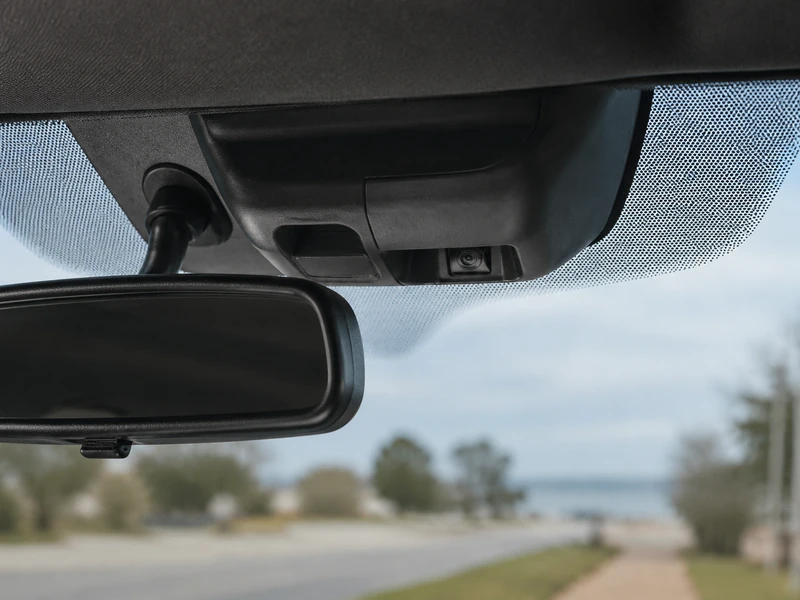
Your car probably has a forward-facing camera behind the windshield, radar tucked behind the front bumper, and blind-spot sensors in the rear corners. Together, these are what modern vehicles use to keep lane-keeping assist, automatic emergency braking, and adaptive cruise control working correctly. They all depend on knowing, precisely, where "straight ahead" is.
A collision, even a minor one, can quietly change that. Here's when recalibration is needed, and what actually happens during the process.
Just had a windshield or bumper repaired elsewhere? Call us at (617) 233-2838 to ask whether your vehicle's specific repair required recalibration.
Why a Repair Makes Recalibration Necessary
A forward camera usually sits at the windshield. Radar sits behind the grille or in a bumper. Blind-spot sensors sit in the rear bumper corners. Replace a windshield, a bumper cover, a mirror, or a suspension component, or straighten the structure any of them mount to, and the sensor is now pointing somewhere slightly different than the vehicle believes.
The car often doesn't know anything is wrong
A camera or radar can be aimed a few degrees off and still report "working fine," because the system checks whether the sensor is functioning electronically, not whether it's physically pointed where the manufacturer intended. A dashboard with no warning lights is not the same thing as a car that's correctly calibrated.
What Repairs Trigger It
The manufacturer's procedure for your specific vehicle decides exactly which calibrations are required, but commonly it includes:
- Windshield replacement
- Bumper repair or replacement
- Side or rearview mirror replacement
- Suspension or wheel alignment work
- Any structural straightening after a collision
Static vs. Dynamic Calibration
Once a repair is complete, the vehicle is set up to the manufacturer's specification, with defined targets at defined distances, on level ground, and the system is taught where straight ahead is. Depending on the vehicle, this happens one of two ways, and many vehicles need both.
Static calibration
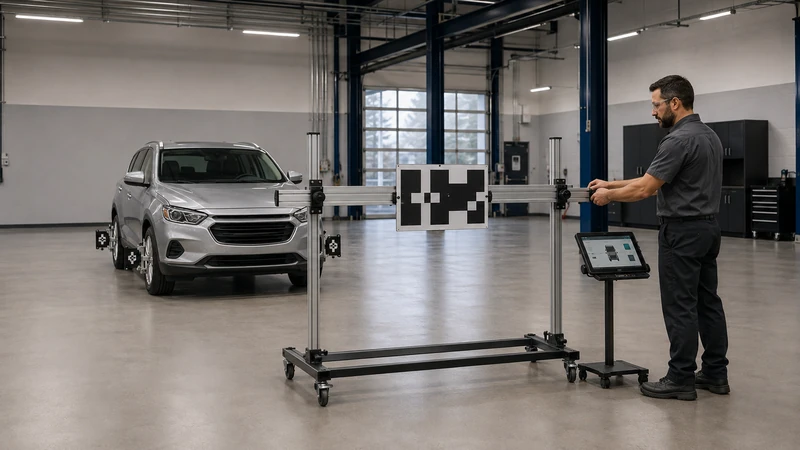
Performed in the shop with the vehicle stationary. Printed target boards are positioned at exact, manufacturer-specified distances and heights around the car, on a level floor, and the system is calibrated against them.
Dynamic calibration
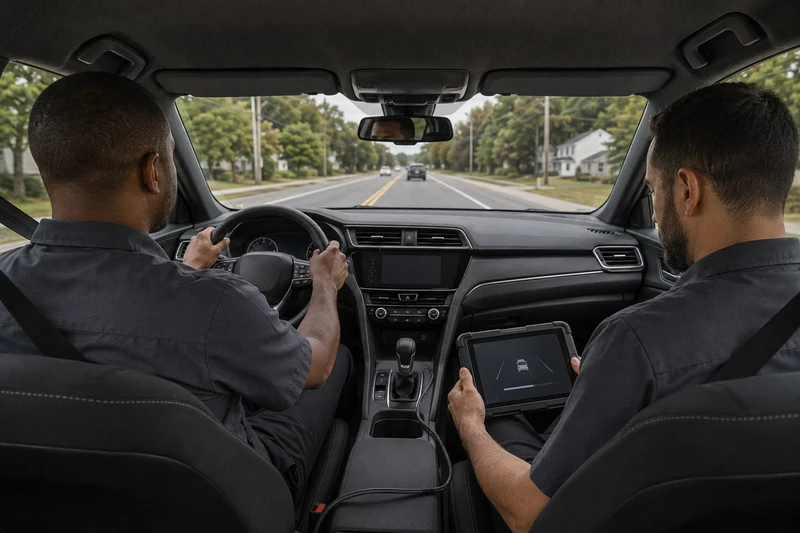
Performed by driving the vehicle on the road, typically at a specified speed range, so the system can read real lane markings, other vehicles, and road signs to complete its own calibration.
What Happens If It's Skipped
Skipping a required recalibration doesn't just risk a warning light; it means safety systems you rely on every day, automatic emergency braking, lane-keeping assist, adaptive cruise control, are operating on a false read of where the car actually is relative to the road. In a scenario where those systems are supposed to intervene in a fraction of a second, a few degrees of misalignment is the difference between a system that helps and one that reacts too late, or not at all.
If you had a windshield, bumper, or collision repair somewhere that didn't mention recalibration at all, that's worth a direct question to the shop, or a second opinion from one that includes it as a matter of course.
Frequently Asked Questions
My dashboard warning lights are off. Do I still need ADAS recalibration?
Very possibly. A camera or radar can be aimed incorrectly and still report no fault, because the system checks whether it is working, not whether it is pointing where the manufacturer intended. A clean dashboard is not proof that the sensors are correctly aligned after a repair.
Which repairs trigger the need for ADAS recalibration?
Commonly windshield replacement, bumper repair or replacement, mirror replacement, suspension or alignment work, and any structural straightening. The manufacturer's procedure for your specific vehicle determines which calibrations are required.
What is the difference between static and dynamic ADAS calibration?
Static calibration is performed in the shop with defined targets placed at defined distances on level ground while the vehicle is stationary. Dynamic calibration is performed by driving the vehicle on the road at a specified speed so the system can read real lane markings and traffic. Many vehicles require both after a repair.
We Follow the Manufacturer's Calibration Procedure
Windshield, bumper, or full collision repair, we recalibrate exactly what the repair required. Free estimate, no commitment.
Get a Free EstimateAbout South Shore Prime Collision: A collision repair shop in Weymouth, MA serving drivers across Massachusetts, with ADAS recalibration included wherever a repair requires it. Call (617) 233-2838 or request a free estimate online.